
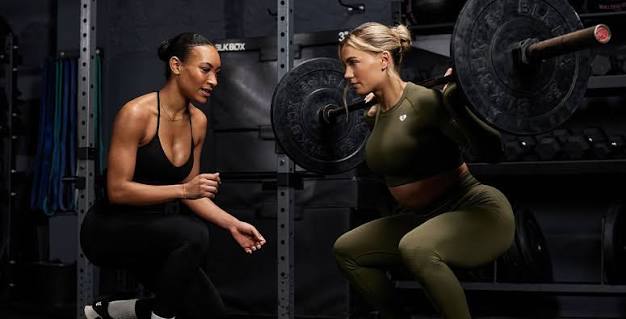
Every strong, confident woman you've ever admired in the gym had a day one. A day when she didn't know what she was doing, felt completely out of place, and had no idea where to start. That day is not the enemy — it is the beginning of everything.
If you've been wanting to start your fitness journey but felt overwhelmed by the options, intimidated by the gym, or unsure whether you were doing the right things — this guide is for you. Starting a fitness journey as a woman doesn't have to be complicated, expensive, or extreme. It just has to begin.
Here is everything you need to know to start your fitness journey with confidence, build a sustainable routine, and create the kind of progress that actually lasts.
Before diving into the how, it's worth addressing the why — because understanding what holds women back from starting is the first step toward moving past it.
Overwhelm. The fitness industry is saturated with information, and most of it is contradictory. Do cardio. Don't do cardio. Cut carbs. Eat more protein. Lift heavy. Lift light. For beginners, the noise is paralyzing. When everything seems equally important and equally urgent, it's easier to do nothing at all.
Intimidation. The gym can feel like a foreign country with its own unwritten rules, equipment you don't know how to use, and people who seem to have been born knowing exactly what they're doing. This feeling — often called "gymtimidation" — is real and incredibly common, especially for women starting out.
Fear of doing it wrong. Many women worry about injuring themselves, looking foolish, or wasting their time on a program that doesn't work. That fear of failure keeps them in a holding pattern of researching and preparing without ever actually starting.
All-or-nothing thinking. Starting a fitness journey feels like a massive commitment — five days a week, perfect nutrition, no breaks. That pressure makes the starting line feel impossibly high, so women wait for the "perfect time" that never arrives.
The truth? None of these barriers are as big as they feel. And every single one dissolves the moment you take your first real step.
The first step in starting your fitness journey is knowing what you actually want — and being honest about why you want it. Not what you think you should want. Not what the fitness industry tells you to want. What you genuinely, personally want for your body and your life.
Common goals women start with include losing body fat, building lean muscle and definition, increasing strength and energy, improving confidence, creating a healthier relationship with food, or simply feeling better in their body day to day. Any of these is a valid and powerful reason to start. But the more specific and personal your goal, the more motivated you'll be when things get challenging.
Write your goal down. Be specific. "I want to lose weight" is vague and easy to abandon. "I want to feel strong and energetic enough to keep up with my kids and feel confident in my clothes" is personal, meaningful, and worth fighting for on the hard days.
At Flourished Fitness, the coaching process begins with exactly this kind of goal-setting conversation. Your goals, your history, and your deeper motivations all shape the personalized program built around you — because a plan that's connected to something that genuinely matters to you is a plan you will actually follow through on.
Here is the single most important mindset shift you need to make when starting your fitness journey: simple and consistent beats perfect and sporadic every single time.
You do not need a six-day-a-week training split to start seeing results. You do not need to overhaul your entire diet overnight. You do not need to figure out every variable before you take your first step. You need to start simple, show up consistently, and build from there.
For most women starting out, a solid three-day full-body workout plan is the perfect way to begin — focusing on big compound exercises that build a strong foundation, kick your metabolism into a higher gear, and help you feel more confident, all without feeling overwhelming. happytrainers blog
Three workouts per week is enough to produce meaningful, visible change. It leaves room for recovery, fits into a busy life, and is sustainable enough to continue for months. The goal in the beginning is not intensity — it is habit formation. Once showing up three days a week becomes automatic, you can layer in more volume and complexity.
Starting too hard too fast is one of the most common reasons women abandon their fitness journey before it has a chance to work. They launch into daily two-hour sessions, cut calories to extremes, and burn out within three weeks. Start at a level you know you can sustain — and then build.
You don't need to know hundreds of exercises to start your fitness journey effectively. You need to know a handful of foundational movements done well — and done consistently.
The Most Important Movement Patterns for Women Beginners:
Squat pattern — Builds the glutes, quads, and hamstrings. Foundational variations include bodyweight squats, goblet squats, and dumbbell squats. The squat pattern is one of the most functional movements in the human body, directly transferring to everyday life.
Hip hinge pattern — Trains the posterior chain — glutes, hamstrings, and lower back. Romanian deadlifts and hip hinges are the cornerstone of this pattern. Getting comfortable with the hip hinge early is one of the most valuable things a beginner can do.
Pressing pattern — Builds the chest, shoulders, and triceps. Variations include push-ups, dumbbell bench press, and shoulder press. Pressing movements develop upper body strength and shape.
Pulling pattern — Builds the back and biceps. Variations include dumbbell rows, lat pulldowns, and resistance band rows. Most women neglect pulling movements and end up with strength imbalances — make pulling a priority from day one.
Core work — Planks, dead bugs, and bird dogs build functional core stability that supports all other movements and protects the lower back.
A beginner workout plan for women should not be complicated — a little structure, simple exercises, and consistency is enough to build strength and boost energy. Peak Women Troy
Beginner Training Structure to Start With:
3 days per week of full-body strength training, with at least one rest or recovery day between each session. Each session should last 30 to 45 minutes. Choose one exercise from each movement pattern per session, perform 3 sets of 10 to 12 repetitions, and focus completely on form before adding weight.
Tip: Don't rush to add weight. Mastering the movement pattern first builds the neuromuscular foundation that makes everything else work better and safer. Visible changes like muscle definition and real body composition shifts usually begin appearing after about 8 to 12 weeks of consistent effort, training at least two to three times a week and backing it up with solid nutrition. UPMC
You can have the best workout program in the world and still not see the results you want if your nutrition isn't aligned with your goals. Fitness and nutrition are not separate — they are two halves of the same equation.
You don't need to track every calorie from day one. But you do need to understand a few foundational nutrition principles that will make everything else you do more effective:
Protein is your highest priority. As a woman who is beginning strength training, protein is the most important macronutrient to get right. It supports muscle repair and growth after your training sessions, keeps you feeling full and satisfied, and directly influences your body composition over time. Most women starting their fitness journey are significantly under-eating protein. A practical goal for beginners is to include a quality protein source — chicken, fish, eggs, Greek yogurt, cottage cheese, lean beef, or plant-based equivalents — at every single meal.
Don't cut calories dramatically. The instinct when starting a fitness journey is to restrict food aggressively in addition to starting a workout program. Resist this instinct. Your body needs fuel to perform, recover, and build the lean muscle that will reshape your physique. Extreme restriction at the same time you're starting a new training program leads to fatigue, poor performance, muscle loss, and burnout.
Hydration matters more than you think. Dehydration directly impairs training performance, slows recovery, and can disguise itself as hunger. Make drinking adequate water a non-negotiable daily habit from the very beginning of your fitness journey.
Eat to fuel your training — not to punish your body. The relationship between food and fitness should be one of nourishment and empowerment, not restriction and control. Build your nutrition around what your body needs to thrive — and work with a coach who can guide you through this with a personalized strategy.
At Flourished Fitness, macro-based nutrition guidance is built into every coaching program. You'll learn exactly how to fuel your body for your goals — not through rigid rules, but through genuine understanding of how nutrition and training work together.
Recovery is not a reward for working hard. It is a requirement for getting results. This is one of the most important truths about starting a fitness journey that most beginners don't hear until they've already burned out or gotten injured.
Your muscles don't get stronger during your workouts — they get stronger during the recovery period after your workouts. When you train, you create microscopic damage to muscle tissue. During rest and recovery, that tissue repairs and rebuilds stronger than before. Without adequate recovery, that process never completes — and you stall, get injured, or both.
For women beginning their fitness journey, this means:
Respecting rest days. Rest days are not wasted days. They are the days your body is actually doing the work of getting stronger. Schedule at least two to three rest or active recovery days per week and treat them as part of your program.
Prioritizing sleep. Sleep is the most powerful recovery tool available to you — and it is completely free. Aim for seven to nine hours of quality sleep per night. Poor sleep impairs muscle recovery, disrupts the hormones that regulate hunger and body composition, and makes every other part of your fitness journey harder.
Managing stress. Chronic stress elevates cortisol — a hormone that impairs fat loss, breaks down muscle tissue, and makes consistent training feel significantly harder. Managing your stress levels is not a soft skill — it is a physiological factor that directly impacts your results.
One of the biggest mistakes women make when starting a fitness journey is measuring progress exclusively by the number on the scale. The scale is one of the most unreliable and emotionally volatile tools in fitness — it fluctuates daily based on water retention, hormonal cycles, food volume, and dozens of other variables that have nothing to do with actual fat loss or muscle gain.
When you're starting a fitness journey, track multiple markers of progress to get an accurate picture of how your body is actually changing:
Strength progress — Are you lifting more than you were four weeks ago? Are the same weights feeling easier? This is direct evidence of adaptation and progress.
Energy and sleep quality — Are you sleeping better? Do you have more energy throughout the day? These are early indicators that your fitness program is working.
How your clothes fit — Body composition changes often show up in how clothing fits before they show up on the scale. Take note of how your clothes feel every two to four weeks.
Progress photos — Monthly progress photos taken in consistent lighting and clothing are one of the most honest assessments of body composition change available. They capture shifts in shape and muscle definition that the scale completely misses.
Mood and confidence — How you feel in your body matters. Increased confidence, better mood, and a more positive relationship with exercise are all genuine markers of progress worth tracking.
Starting your fitness journey alone is possible — but it is significantly harder, slower, and more prone to the start-stop cycle than starting with the right support structure around you.
If you're not sure where to start, working with a personal trainer can be enormously helpful. With a tailored plan, you will feel confident about what you're doing while getting the most out of your workout. Yelp
A coach who builds your program specifically for your body, checks in on your progress every week, and is available to answer your questions in real time removes the guesswork entirely. You don't have to figure out what to do, wonder if you're doing it right, or navigate plateaus and setbacks alone.
This is what the Flourished Fitness coaching program was designed to provide for women starting their fitness journey. From the detailed intake application that shapes your personalized program, to weekly check-ins that keep you on track, to direct coach communication via email and text — every element of the experience is built to give you the support, structure, and accountability that transforms a good intention into a genuine transformation.
The #FlourishedWomen community is full of women who started exactly where you are right now — uncertain, overwhelmed, and ready for something different. What they found was a program that met them exactly where they were and built them into the strongest, most confident versions of themselves.
Week 1 through 3 will feel new. Your body is learning movement patterns, your nervous system is adapting, and you're building the habit of showing up. Don't judge your progress during this phase — just focus on consistency and form.
Weeks 4 through 8 are when momentum starts to build. You'll feel stronger in your workouts, your energy will improve, and you'll start to notice your body adapting. This is when most women get their first glimpse of real progress — and it's deeply motivating.
Weeks 9 through 12 are when visible changes begin to emerge. Clothes start fitting differently. Strength numbers climb noticeably. Body composition shifts become visible. Confidence grows in a way that starts to spill over into every other area of your life.
By week 12, you won't just have results — you'll have a habit, a foundation, and a relationship with your body that is completely different from where you started.
That is the power of starting your fitness journey with the right plan, the right guidance, and the commitment to show up consistently.
You don't need to have everything figured out. You don't need the perfect program, the perfect gym, or the perfect time. You need to make one decision — the decision to start — and then take the first step.
Flourished Fitness was built to walk beside women at exactly this moment. Whether you're starting for the first time or starting over for the last time, the personalized coaching experience at Flourished Fitness gives you everything you need to begin your fitness journey with clarity, confidence, and the support of a coach who is genuinely invested in your success.

Your fitness journey starts today — and you don't have to figure it out alone.
Fill out the Flourished Fitness client application and take the first step toward a personalized coaching program built specifically for where you are right now. Your free consultation is waiting.


.svg)


